Artificial intelligence is described as a medical breakthrough so often that the phrase can lose its meaning. A new model is released, a hospital adds an automated feature, or a company places a conversational interface over existing software, and the result is presented as a transformation of medicine.
There are real breakthroughs underneath that noise. AI has changed protein research, helped move a newly designed drug into randomized human testing, identified promising antibacterial compounds, improved selected screening pathways, and made some forms of health support easier to reach.
Those achievements do not all belong in the same category. Some have changed science without yet changing treatment. Some have entered clinical care but remain narrow. Others improve access rather than create a new diagnostic or therapy. A much larger group are useful advancements that make established systems faster, clearer, or easier to use.
What counts as a medical breakthrough?
A medical breakthrough does not need to be a cure. It does need to materially change what researchers, clinicians, health systems, or patients can do.
A scientific breakthrough creates a research capability that was previously impractical or unavailable. A translational breakthrough carries a discovery toward human testing. A clinical breakthrough produces a validated improvement in a real care pathway. An access breakthrough materially changes who can obtain useful health information, screening, communication support, or professional assistance.
These categories sit at different distances from patient outcomes. Predicting a protein structure can transform laboratory research without treating a patient. Identifying a molecule can be a discovery breakthrough even if the candidate later fails. Improving a screening pathway can be clinically important without proving a survival benefit. Making an examination available during an ordinary visit can be an access breakthrough even when the underlying medical test already existed.
The relevant question is not whether a product uses AI or is marketed as AI. It is whether AI materially changed what could be discovered, delivered, understood, or accessed.
Not every AI-branded advance is a breakthrough
The term artificial intelligence now covers technologies ranging from statistical classifiers and computer-aided detection to deep neural networks and generative language models. Some systems described as new AI products are older clinical or administrative technologies with a newer assistive layer.
A clinical rules engine may receive a natural-language interface. Existing imaging software may gain an automated summary. A documentation system may use a language model to organize information that it already collected. A scheduling platform may add a conversational assistant without changing the underlying care pathway.
These changes can be valuable. A clearer interface can reduce training time. A good summary can lower administrative burden. Better translation can help someone understand instructions. Faster retrieval can allow a clinician to find relevant information sooner.
They are advancements, however, unless the AI layer materially changes the medical capability or who can benefit from it.
That is the cantilever point for evaluating the field. A breakthrough changes what medicine can discover, deliver, or make reachable. An advancement improves the speed, usability, efficiency, or integration of something that already exists. AI branding emphasizes the technology without necessarily showing that the underlying medical function has changed.
Commercial novelty and medical breakthrough are not the same category.
AlphaFold changed structural biology
AlphaFold2 remains the clearest completed example of an AI scientific breakthrough in medicine and biology.
Proteins carry out much of the functional work of living systems, and their three-dimensional structures strongly influence what they do. Determining those structures experimentally can require extensive laboratory work. AlphaFold2 demonstrated that a deep-learning system could predict protein structures with a level of accuracy that changed the practical scale of the problem.
By the time the work contributed to the 2024 Nobel Prize in Chemistry, predicted structures were available for virtually all 200 million proteins then identified. More than two million people across 190 countries had used the system.
The breakthrough was not that AlphaFold produced a cure. It changed what researchers could investigate, how quickly they could form structural hypotheses, and how broadly that capability could be distributed.
Predicted structures still require interpretation. They do not automatically reveal a protein's complete behaviour, prove a biological mechanism, or replace laboratory validation. AlphaFold is best understood as an extraordinary hypothesis engine.
That boundary does not diminish the achievement. It defines it. AlphaFold is a completed scientific breakthrough whose downstream clinical effects will continue to unfold through drug research, disease biology, enzyme design, and other fields.
An AI-developed drug reached randomized testing
AI-assisted drug development has produced many announcements. Far fewer programmes have progressed far enough to generate randomized human trial evidence.
Rentosertib, an experimental treatment for idiopathic pulmonary fibrosis, is one of the strongest current examples. Its biological target was identified using generative AI, and the small molecule was also designed through an AI-supported discovery platform.
In a phase 2a trial, 71 participants were randomized across three rentosertib dose groups and placebo for 12 weeks. The trial's primary purpose was to assess safety. The highest-dose group showed an encouraging secondary signal in forced vital capacity, a measure of lung function, while the placebo group declined on average.
The result deserves attention, but it also requires restraint. Sixteen participants discontinued treatment before completing the 12-week period. The study was small and short. The developer sponsored the trial, and larger studies of longer duration are needed to determine whether the signal represents a durable clinical benefit.
Rentosertib has not established that AI has solved drug development. It has demonstrated that an AI-identified target and AI-generated molecule can move through laboratory development and into randomized human testing.
That is a serious AI-to-clinic milestone. It is a translational breakthrough, not yet a proven therapeutic breakthrough.
AI is finding antibacterial candidates researchers might have missed
Antibiotic discovery offers another example of AI searching a space that is too large and chemically varied to examine efficiently by conventional methods alone.
In the study that identified abaucin, researchers first tested approximately 7,500 molecules for activity against Acinetobacter baumannii, a pathogen that can be highly resistant to existing antibiotics. They trained a neural network on those results and used it to predict structurally different compounds that might inhibit the bacterium.
The system helped identify abaucin, which demonstrated narrow-spectrum activity against A. baumannii and controlled infection in a mouse wound model.
The discovery is important because it shows AI doing more than accelerating a familiar search. It helped researchers prioritize a credible lead that conventional screening had not elevated and that acted through a distinct mechanism.
Abaucin is not an established human treatment. A laboratory result and an animal model cannot establish human safety, dosing, efficacy, manufacturing feasibility, or resistance behaviour.
The breakthrough was in discovery. AI helped find a promising antibacterial candidate that researchers might otherwise have missed. Whether that candidate becomes a medicine remains a separate question.
AI-supported screening has entered real care
Some of the strongest clinical evidence for AI comes from narrow screening pathways rather than general-purpose medical reasoning.
The final analysis of the Swedish MASAI mammography trial involved more than 105,000 women randomized to AI-supported screening or standard double reading without AI.
The AI-supported pathway produced a non-inferior interval-cancer rate, meaning it did not lead to an unacceptable increase in cancers diagnosed between screening rounds. Screening sensitivity was 80.5 percent with AI support, compared with 73.8 percent under standard double reading. Specificity was 98.5 percent in both groups, and the AI-supported pathway reduced the amount of radiologist reading required.
This is stronger evidence than a retrospective benchmark or a comparison performed on a curated image set. It is a population-scale randomized trial embedded in an actual screening programme.
The study did not prove a reduction in breast-cancer mortality. It also does not establish that AI can independently practise radiology. It shows that a bounded AI system can improve the performance and workload of a particular screening pathway while preserving specificity.
That is a genuine clinical breakthrough, precisely because the claim remains tied to the function and evidence that produced it.
Accessibility can itself be a breakthrough
Medical progress is often measured by what science discovers or what treatment accomplishes. It should also be measured by whether people can reach the resulting knowledge and services.
For rural communities, a specialist examination may require substantial travel, time away from work, additional expense, and a referral pathway that is difficult to complete. People who are economically disenfranchised, living with disabilities, navigating care in another language, or dealing with fragmented institutions can face different versions of the same distance.
AI can become a breakthrough when it changes the structure of that pathway rather than merely making an existing website more convenient.
The ACCESS randomized trial tested autonomous diabetic eye examinations during ordinary diabetes visits for a racially and ethnically diverse group of young people. Every participant assigned to the point-of-care AI pathway completed the eye examination. In the referral and education group, 22 percent completed an examination within six months.
Among participants whose AI examination produced an abnormal result, 64 percent completed specialist follow-up. The study took place at one academic centre, and the system remained a specific regulated tool for a specific examination. The size of the difference nevertheless matters.
The breakthrough was not simply that software could examine retinal images. It was that the screening pathway could be completed during a visit the patient was already attending, rather than depending on another appointment, more travel, and successful navigation between services.
The same principle has global implications. The World Health Organization has recommended computer-aided interpretation of digital chest X-rays as an option for tuberculosis screening among people aged 15 and older. In 2025, six independently assessed software products met WHO performance standards.
These systems do not confirm tuberculosis. A positive screen still requires diagnostic evaluation. Their value is that screening capacity can be extended into settings where trained image readers are scarce.
This also sharpens the article's distinction between an advancement and a breakthrough. Computer-aided detection predates the current generative-AI cycle. Its algorithmic lineage may be older, but its use can still represent an access breakthrough when it materially changes who can receive a service.
Generative systems may support access in other ways. They can simplify medical language, translate explanations, add captions, convert speech to text, help people prepare questions, and guide users through complex forms or service directories.
A 2025 study of 60 patient-education documents found that language models could reduce reading difficulty from approximately grade 10 to ranges between grades 5.6 and 7.6, depending on the model. Some rewritten materials introduced inaccuracies, and the researchers recommended human review.
That is a useful advancement. It becomes an access or clinical breakthrough when reliable deployment measurably improves comprehension, navigation, screening, adherence, or care for people who were previously excluded.
Access to AI is not the same as access to medical care. A model cannot perform every examination, provide physical treatment, supply a missing clinician, or repair an under-resourced health system. It can still reduce informational, communication, and logistical barriers that make those gaps worse.
Reducing the distance between a person and usable health support can itself be a medical breakthrough.
Genomic prediction shows both scale and limits
Genetic medicine contains another search problem of enormous scale. A change in a single amino acid can be harmless, contribute to disease, or remain difficult to interpret because clinical evidence is sparse.
AlphaMissense applied deep learning to predict the potential effects of human missense variants. The system classified 89 percent of possible variants as likely benign or likely pathogenic, creating a broad computational map for a field in which only a small fraction of possible changes had received clinical interpretation.
That scale can help researchers and clinical laboratories decide which variants deserve closer attention. It cannot convert a prediction into a diagnosis.
A 2025 rare-disease cohort study found substantial discordance between AlphaMissense and clinical-grade classification. For the study's expert-curated pathogenic variants, the model produced 57.6 percent recall and 32.9 percent precision.
Clinical variant interpretation depends on more than sequence. Patient phenotype, family history, inheritance patterns, population frequency, laboratory evidence, and gene-specific knowledge can all matter.
AlphaMissense is therefore best described as a breakthrough in computational prioritization, not autonomous genetic diagnosis. It can narrow a search that is too large to conduct manually while leaving the clinical conclusion to a broader evidentiary process.
What we are particularly excited about
The limits described in this article should not obscure the scale of the opportunity. Health AI is still early, and many of its most consequential applications may emerge from combining capabilities that are currently developing separately.
We are particularly excited about AI systems that can help researchers move more intelligently between biological evidence, molecular design, laboratory testing, and clinical development. Protein prediction, generative chemistry, genomic interpretation, and automated experimentation could shorten the distance between a scientific question and a testable intervention. The greatest value may come not from any single model, but from better coordination across the full discovery process.
Earlier and more accessible detection is another area of substantial promise. AI-supported screening may allow more conditions to be identified during routine care, in primary-care settings, or in communities where specialist interpretation is difficult to obtain. When detection is connected to reliable follow-up, this could change not only how disease is recognized, but who has a realistic opportunity to receive timely care.
Rare diseases may also benefit disproportionately. Many patients spend years moving between specialists because their symptoms do not fit common patterns and the relevant evidence is scattered across genetics, imaging, laboratory results, published cases, and family history. AI may help clinical teams assemble those fragments more effectively and begin difficult investigations from a stronger evidentiary position.
Medical robotics could extend these capabilities into the physical world.
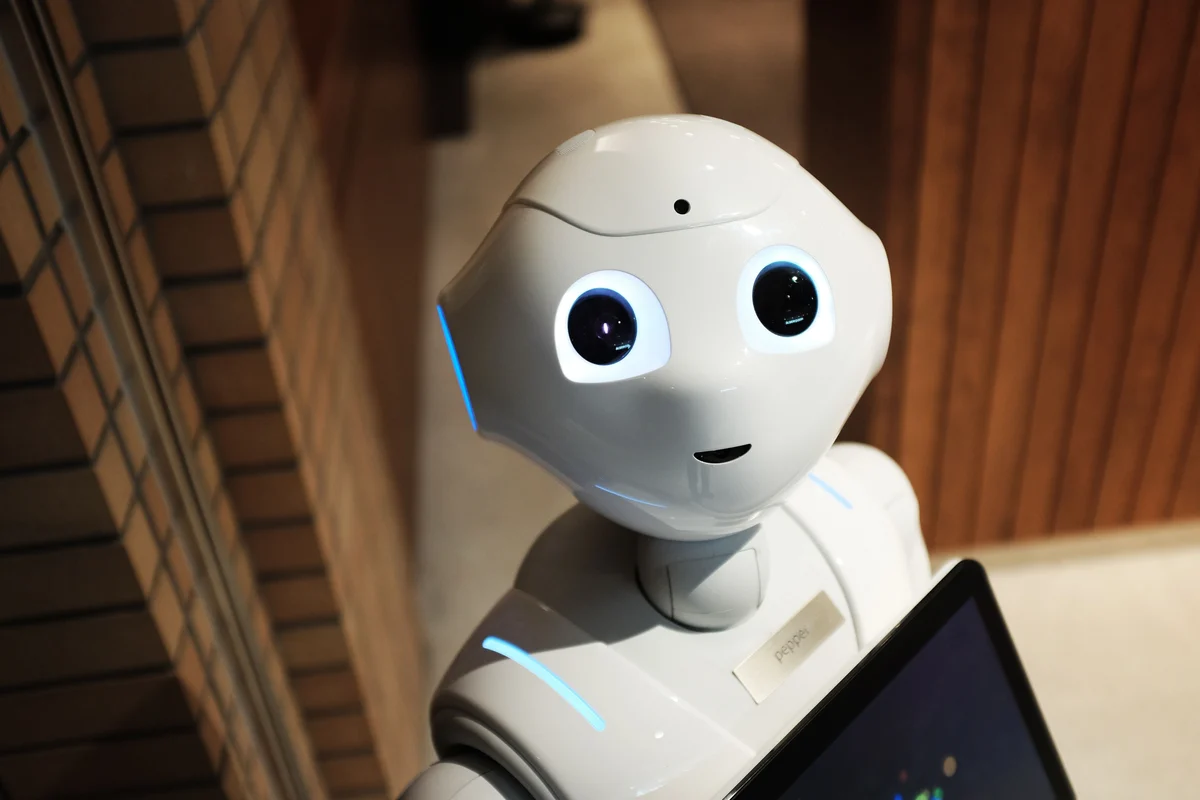
AI-assisted systems may support surgery, rehabilitation, mobility, laboratory automation, remote care, and tasks that are difficult, repetitive, or unsafe for people to perform alone. Robotics may also help skilled professionals deliver greater precision or reach patients in places where specialized physical support is limited. Because these systems can act directly on people and their environments, their promise carries a higher evidentiary and safety threshold. Progress will depend on reliable engineering, bounded authority, human oversight, fail-safe design, and clear accountability.
We are equally interested in how AI could make health systems easier to navigate. Clearer explanations, multilingual communication, assistive interfaces, better preparation for appointments, and more usable access to medical knowledge may appear less dramatic than a newly discovered molecule or an advanced medical robot. For people historically excluded by geography, disability, cost, language, or institutional complexity, those capabilities could become some of the field's most meaningful advances.
AI may also return time and attention to healthcare. Systems that reduce repetitive administrative work, organize information, and support bounded decisions could allow clinicians and care teams to devote more of their limited capacity to judgment, communication, and human presence. That benefit must be demonstrated rather than assumed, but it remains one of the most important possibilities.
None of these outcomes is guaranteed. They depend on evidence, infrastructure, governance, access, and careful integration into real care. But the direction is genuinely exciting. AI is beginning to expand the range of questions medicine can investigate, the interventions technology can support, the pathways health systems can deliver, and the number of people those pathways may ultimately reach.
AI may also become an important extension of human curiosity, helping us ask better questions over time and pursue our collective desire to live longer, healthier lives.
That future is being made possible by the many researchers, clinicians, patients, engineers, public institutions, health systems, regulators, and other contributors working to ensure that progress is not only ambitious, but safe, useful, and worthy of all our trust.
Where AI has advanced medicine without breaking through
Most useful Health AI currently sits below the breakthrough threshold.
Systems can summarize records, draft documentation, organize evidence, identify coding gaps, translate instructions, route messages, prepare questions, or make established software easier to operate. These functions can save time and reduce friction. In some environments, those gains may be operationally significant.
They do not automatically establish a medical breakthrough.
A model outperforming another model on a benchmark is a capability result. A digitally generated molecule that has never been synthesized is a computational output. A promising animal study is preclinical evidence. A narrow device authorization permits a bounded function. Faster administrative work is an efficiency gain.
None of those categories, standing alone, demonstrates improved treatment, recovery, safety, survival, or access.
The same caution applies to conversational systems. A language model may help a physician reason through a simulated case, explain a laboratory term, or make an educational document easier to read. These can be valuable advancements while prospective evidence of real-world benefit is still being developed.
Capability, permission, and patient benefit remain separate questions.
The distinction is not intended to dismiss advancement. Medicine often improves through accumulated refinements rather than singular discoveries. Better interfaces, clearer explanations, more efficient workflows, and stronger communication can create substantial value.
The purpose of the threshold is to keep the claim proportional to the evidence.
Where AI has not yet broken through
The examples in this article do not amount to a general-purpose digital physician. They do not show that AI has solved drug attrition, replaced experimental biology, eliminated diagnostic uncertainty, or made specialist care universally available.
AI remains strongest when a problem can be bounded, the input can be defined, the output can be evaluated, and responsibility for the surrounding pathway remains clear.
Protein prediction does not administer treatment. Molecule generation does not establish efficacy. Image classification does not reproduce the whole practice of radiology. A readable explanation does not confirm that the reader received appropriate care.
The most important future breakthroughs may emerge when several capabilities are connected safely: molecular prediction with laboratory automation, screening with reliable follow-up, genomic prioritization with phenotype-aware interpretation, or accessible communication with accountable clinical services.
Integration will make the evidence question more demanding, not less. A system that can act across a longer pathway must be evaluated not only for technical accuracy but for safety, equity, privacy, workflow effects, accountability, and patient outcomes.
The holographic doctor is still on another deck
Star Trek: Voyager imagined the Emergency Medical Hologram as a physician containing an extraordinary range of medical knowledge. The character's most important development, however, was not an increase in storage or processing power. It was his gradual ability to communicate, improvise, exercise ethical judgment, form relationships, and understand what patients needed from the person providing their care.
Robert Picardo, who portrayed The Doctor, recently recalled a medical AI researcher telling him that "the knowledge is not enough. You need the human interface, you need the bedside manner." The observation captures the boundary between medical information and medicine itself.

A system may retrieve the correct evidence, recognize a pattern, translate an explanation, or recommend a next step. That does not by itself create the relationship, responsibility, physical presence, and trust involved in caring for a patient.
The comparison now extends across a much longer fictional timeline. Picardo reprises the same Doctor in Star Trek: Starfleet Academy, roughly eight centuries after his 24th-century service aboard Voyager. He carries centuries of digital memory and experience, yet relationships, mentorship, loss, and continued personal development still matter. Even Star Trek does not treat perfect recall as the completion of medicine.
For readers less familiar with the character, an official Star Trek retrospective and interview with Picardo traces how Voyager's temporary emergency program developed into an increasingly complex individual over seven seasons.
That fictional journey remains a useful boundary for the real one. AI has begun to approach some of the Doctor's individual capabilities, one carefully bounded breakthrough at a time. It can search vast scientific spaces, identify promising molecules, interpret selected medical data, translate complex information, and make health knowledge more reachable.
The Holo Doc remains science fiction, but the more revealing lesson is that even science fiction's medical AI required more than knowledge.
Science fiction often predicates the future. But the final distance may not be computational or holographic. It is the distance between what intelligence can make possible and how those possibilities become discovery, access, better care, and healthier lives.
We expect to revisit and update this article as Health AI advances and the evidence continues to develop.
References
- The Nobel Prize in Chemistry 2024 The Nobel Prize. October 9, 2024.
- A generative AI-discovered TNIK inhibitor for idiopathic pulmonary fibrosis: a randomized phase 2a trial Nature Medicine. June 3, 2025.
Show 9 more references Hide additional references
- Deep learning-guided discovery of an antibiotic targeting Acinetobacter baumannii Nature Chemical Biology. May 25, 2023.
- Interval cancer, sensitivity, and specificity comparing AI-supported mammography screening with standard double reading without AI in the MASAI study The Lancet. January 31, 2026.
- Autonomous artificial intelligence increases screening and follow-up for diabetic retinopathy in youth: the ACCESS randomized control trial Nature Communications. January 11, 2024.
- Use of computer-aided detection software for tuberculosis screening: WHO policy statement World Health Organization. June 10, 2025.
- Accurate proteome-wide missense variant effect prediction with AlphaMissense Science. September 22, 2023.
- Discordance between a deep learning model and clinical-grade variant pathogenicity classification in a rare disease cohort npj Genomic Medicine. February 28, 2025.
- Enhancing the Readability of Online Patient Education Materials Using Large Language Models: Cross-Sectional Study Journal of Medical Internet Research. June 4, 2025.
- Robert Picardo Thought It Was a Mistake When He Was Asked to Return to Star Trek 25 Years Later People. February 28, 2026.
- Voyager's Caretaker: An Interview with Robert Picardo StarTrek.com. October 27, 2022.