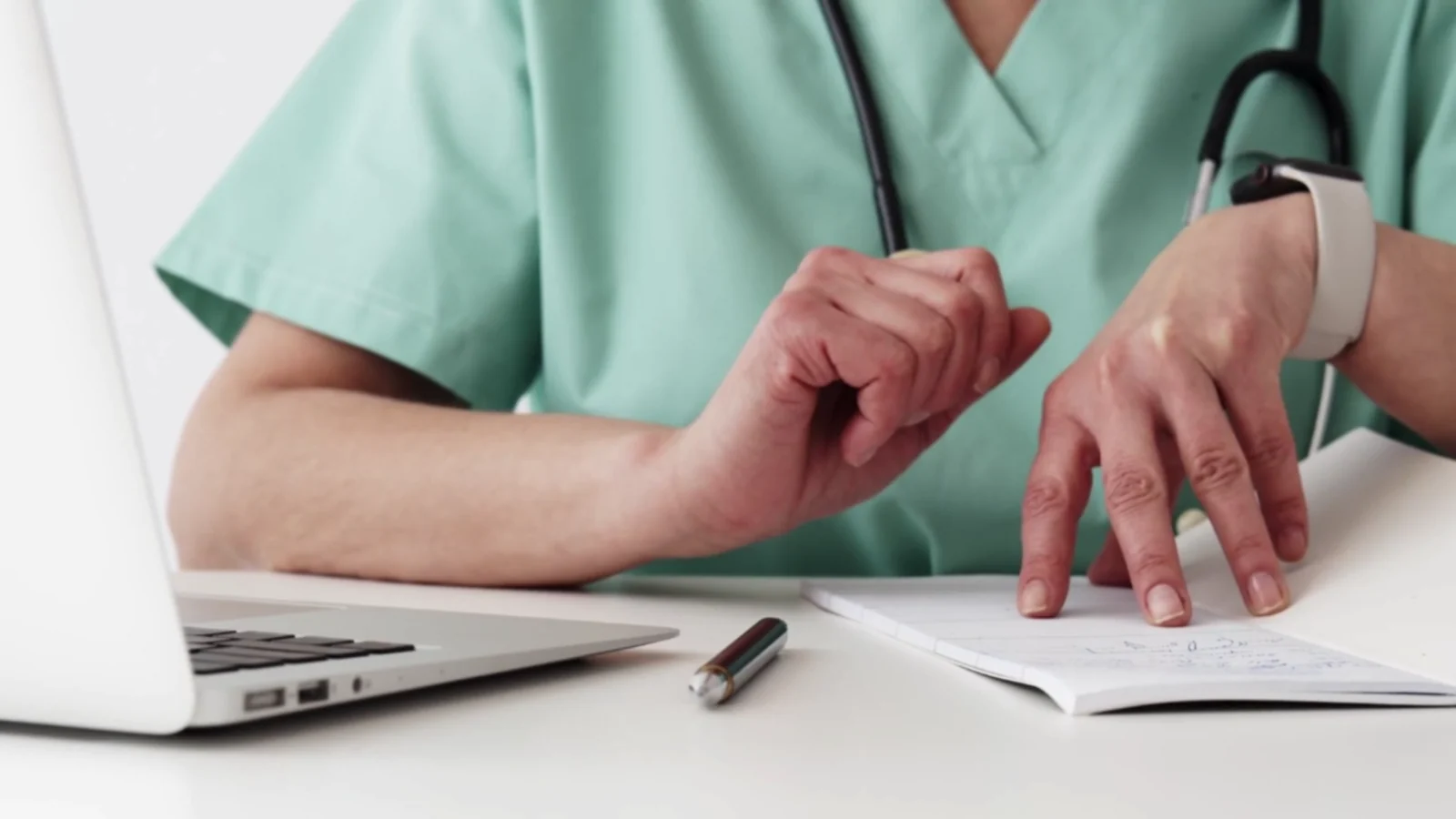
A clinical visit asks a clinician to manage several tasks at once. They listen, examine, think, explain, arrange follow-up care, and create an accurate medical record. Documentation can continue after the patient leaves.
AI scribing, a form of ambient clinical documentation, offers a practical form of workflow assistance. The technology processes a clinical conversation and prepares a draft note for the clinician to review, refine, and approve.
The potential benefit is easy to understand. AI scribing may free up a clinician's hands and attention during the visit. Less continuous typing may create more room for eye contact, careful listening, physical examination, and natural conversation.
A 2025 quality-improvement study involving 263 ambulatory clinicians across six health systems found that 30 days of ambient AI-scribe use was associated with lower self-reported burnout, reduced documentation burden, less after-hours documentation, and greater focused attention on patients. The before-and-after design captures short-term clinician experience and supports further comparative evaluation.
How can AI health workflows improve care?
AI health workflows can move routine documentation through a clear sequence:
Patient conversation → draft note → clinician review → approved medical record
This is one of the most understandable uses of AI in health care. The technology supports a defined documentation task while the clinician directs the visit, interprets the patient's needs, and remains responsible for the medical record.
AI scribes can turn spoken conversations into structured draft documentation. Depending on the clinical setting, the resulting material may also support referral letters, patient summaries, follow-up instructions, and other administrative tasks connected to care.
Used well, AI scribing may support:
- more eye contact during the appointment;
- greater freedom to examine, demonstrate, and interact;
- more attention available for listening and conversation;
- faster preparation of draft clinical notes;
- reduced documentation after clinic hours;
- more consistent organization of clinical information.
The value comes from assistance within the workflow. The clinician and patient remain at the centre of the visit while the technology helps prepare the documentation that follows.
How does AI scribing fit into a clinical visit?
The exact workflow varies across health systems and clinical settings. An AI scribe generally processes spoken conversation, converts relevant information into text, and prepares a structured draft. The clinician reviews that draft and determines what becomes part of the official medical record.
A typical workflow may include:
- The clinician introduces the documentation assistant.
- The patient receives a brief explanation.
- The clinical conversation takes place.
- The system prepares a draft note.
- The clinician checks the content.
- Corrections and refinements are made.
- The clinician approves the final record.
This gives the technology a clear supporting role. Australian clinical-use guidance organizes responsible use around actions taken before, during, and after an AI-supported clinical interaction.
How can AI scribing support in-person visits?
During an in-person appointment, documentation can compete with examination and conversation. A clinician may move between the patient, the keyboard, the examination area, and the medical record.
AI scribing may allow more of the note to develop while the visit continues. This can free up hands for physical examination, demonstration, and patient interaction. It may also allow the clinician to follow the conversation with fewer interruptions.
The technology can work quietly in the background while the clinician remains present in the room.
The clinician provides the care. The system helps prepare the draft.
How can AI scribing support video and virtual visits?
The benefit may be especially noticeable during video and virtual care.
A virtual appointment already asks the clinician to manage several digital surfaces. They may move between the patient's video, the keyboard, the medical record, test results, and other clinical information.
Continuous typing can interrupt the visual rhythm of the conversation. AI scribing may reduce some of that switching by preparing a draft while the appointment continues.
This may support:
- more consistent eye contact through the camera;
- fewer pauses for typing;
- smoother movement through the clinical discussion;
- more attention to tone, expression, and patient questions;
- faster completion of the visit record.
Virtual care depends heavily on communication. AI-assisted documentation may help the clinician remain visually and conversationally engaged while the administrative record develops in the background.
What should patients understand before AI scribing begins?
Patients benefit from knowing when AI scribing forms part of the visit. A brief explanation can cover the main points:
- the technology processes the clinical conversation;
- its purpose is to prepare draft documentation;
- the clinician reviews the resulting note;
- information handling follows the health service's privacy and security processes;
- the patient can ask questions about the workflow;
- another documentation approach may be available.
The explanation can remain simple:
I use an AI documentation assistant that helps prepare a draft note from our conversation. I review and approve the note before it enters your medical record. I can explain how it works and the documentation options available today.
This creates awareness while keeping the interaction accessible. WHO guidance for AI in health emphasizes autonomy, transparency, human well-being, safety, accountability, inclusiveness, and sustainable use.
Can a sign support patient awareness?
Yes. A clear sign can introduce AI-assisted documentation before the appointment begins.
A notice may appear:
- during online booking;
- in a confirmation message;
- at reception;
- in the waiting room;
- inside the examination room;
- at the beginning of a virtual visit.
The sign can explain that AI scribing may be offered and that patients can ask questions about how it works. A short explanation during the encounter can connect the general notice to the specific visit.
Advance notice → brief explanation → patient choice → activation
The sign creates early awareness. The conversation creates shared understanding.
Does every patient need to click Accept?
A digital acceptance step can work well in some settings. Virtual care, online booking, and digital check-in can provide a clear opportunity for the patient to review information and select a documentation method.
In-person settings may use a brief verbal confirmation that becomes documented in the medical record. The communication process carries the central role, while the interface records the choice.
A useful digital prompt could say:
AI-assisted documentation may be used to prepare a draft note from today's visit. The clinician will review and approve the final record. Please select your preferred documentation option.
- Use AI-assisted documentation
- Use the regular documentation process
- Ask me during the visit
A button can record the choice. A conversation can add context. Together, they can create a clear and respectful workflow.
What happens to the clinical conversation?
Health services need a clear understanding of how their selected system handles information.
Relevant questions may include:
- whether audio is recorded or processed temporarily;
- whether a transcript is created;
- where the information is processed;
- how long audio, transcripts, or drafts remain available;
- who can access the information;
- how the final note reaches the medical record;
- how corrections are made;
- whether information supports any additional purposes.
These details vary across systems and jurisdictions. Clear internal governance allows clinicians to answer patient questions confidently. It also supports privacy, information security, clinical safety, and consistent implementation.
How does clinician review complete the workflow?
AI scribing reaches its strongest form when human review completes the process. The system prepares a draft. The clinician brings clinical context, correction, judgment, and approval.
AI prepares → clinician checks → clinician refines → clinician approves
The review can address:
- factual accuracy;
- missing information;
- wording and emphasis;
- medication details;
- clinical context;
- follow-up plans;
- patient instructions;
- appropriate placement in the record.
This final review supports both efficiency and accountability.
A useful form of AI assistance
AI scribing offers a positive and practical vision for health AI. It can help clinicians spend more of the visit listening, reduce repetitive documentation work, and prepare a useful first draft of the medical record.
During in-person care, it may free up hands and attention for examination, conversation, and patient interaction. During video and virtual visits, it may support visual engagement and a more natural conversational rhythm.
Early evidence suggests that these systems may improve clinicians' experience of documentation and support greater focused attention on patients.
Explain the technology. Invite questions. Process the conversation responsibly. Review the draft. Keep the clinician responsible for the final record.
A sign can introduce the process. A digital choice can document it. A direct conversation can connect the technology to the patient's understanding.
At its best, AI scribing may free up hands, attention, and time during both in-person and virtual visits while allowing technology to work quietly in support of the clinical relationship.
Editorial boundary
This article describes general clinical workflow, patient communication, information governance, and human-review considerations. Requirements vary by jurisdiction, health system, clinical setting, product design, and the way information is processed, retained, or disclosed.
References
- Use of Ambient AI Scribes to Reduce Administrative Burden and Professional Burnout JAMA Network Open.
- Guidance on the Use of AI-Enabled Ambient Scribing Products in Health and Care Settings NHS England.
Show 2 more references Hide additional references
- AI Clinical Use Guide Australian Commission on Safety and Quality in Health Care.
- Ethics and Governance of Artificial Intelligence for Health World Health Organization.