
A new industry alliance is forming around a problem that healthcare organizations will increasingly need to confront: how to secure AI systems that can do more than generate an answer.
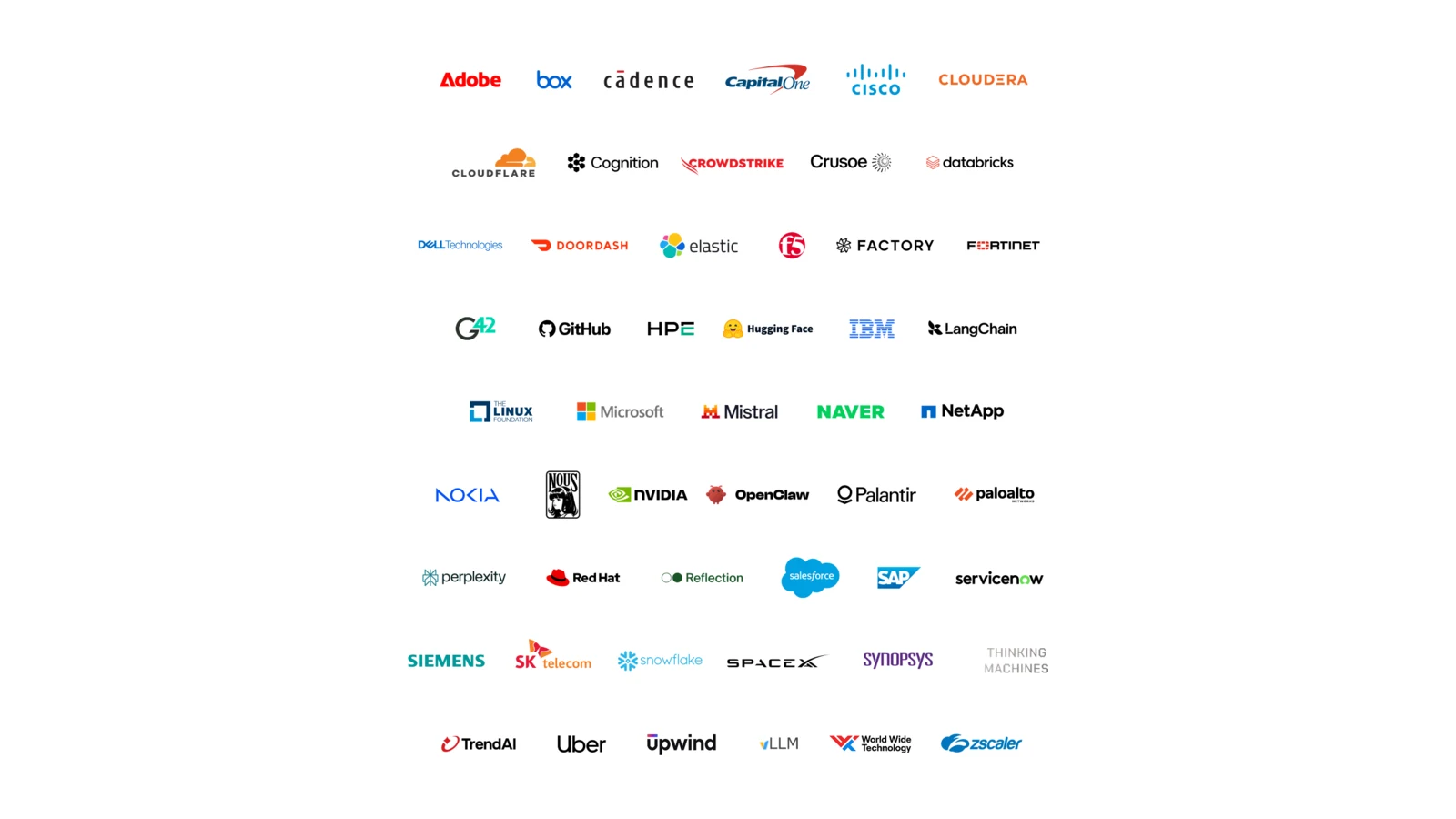
The Open Secure AI Alliance brings together companies and organizations spanning artificial intelligence, cloud computing, enterprise software, cybersecurity, open-source infrastructure, and telecommunications. Its inaugural participants include NVIDIA, Microsoft, IBM, Red Hat, GitHub, Hugging Face, Cloudflare, CrowdStrike, Cisco, Databricks, HPE, Mistral, Salesforce, ServiceNow, Snowflake, Palo Alto Networks, the Linux Foundation, and dozens of others.
According to the announcement, the alliance will develop and share open models, agent harnesses, datasets, evaluation methods, identity systems, software supply-chain protections, and other defensive tools for AI.
NVIDIA is contributing open models, model weights, data, and research, including a new project called NVIDIA Labs Object-Oriented Agents, or NOOA. The research framework is intended to make AI agent behaviour easier to test, trace, audit, and govern.
The alliance is not focused specifically on medicine. Its initial membership is dominated by technology companies, cybersecurity vendors, cloud providers, and open-source organizations rather than hospitals or clinical institutions.
Its work may nevertheless have important implications for Health AI.

As AI systems begin to access records, call software tools, coordinate workflows, write code, communicate with other services, and initiate actions, healthcare organizations will need to evaluate more than the intelligence of the underlying model. They will also need to understand the identities, permissions, credentials, tools, guardrails, logs, and execution environments surrounding it.
Securing the model may not be enough. Health systems may need to secure the entire agent.
AI agents create a different kind of risk
Much of the public conversation about medical AI still focuses on whether a model produces an accurate answer.
That remains important. A system that generates unsupported clinical information, overlooks uncertainty, or communicates beyond its intended use can create serious risk.
Agentic systems introduce another layer.
An AI agent may combine a language model with access to databases, software applications, internal documents, communication systems, and external services. It may be authorized to retrieve information, submit forms, write files, send messages, modify records, schedule tasks, or coordinate other automated systems.
The central safety question therefore changes.
It is no longer only whether the model understood the request or generated the correct response. It is also whether the agent was authorized to perform an action, whether its permissions were appropriately limited, whether its activity was recorded, and whether the organization can reconstruct what happened afterward.
In healthcare, those questions can quickly become questions of patient safety, privacy, operational continuity, and institutional accountability.
A compromised documentation assistant could expose clinical records. A poorly governed claims agent could submit incorrect information. A research agent could introduce contaminated software or unreliable data into a development workflow. An administrative system could communicate with patients or alter schedules outside its authorized role.
None of these systems needs to diagnose a patient to create meaningful consequences.
The full agent stack matters
One of the strongest ideas in the alliance announcement is that an AI agent is not simply a language model.
It is a larger technical system made up of models, harnesses, permissions, identities, tools, logs, guardrails, and evaluation processes.
That distinction is especially relevant to healthcare procurement.
Organizations may be tempted to evaluate an AI product primarily by asking which model it uses, how it performs on a benchmark, or which company developed it. Those questions reveal only part of the deployed system.
A health system must also understand which applications the agent can access, which actions it can perform, how its credentials are managed, whether access can be revoked, and whether every consequential action can be traced and investigated.
A capable model inside a weak or poorly governed harness can still create an unsafe system.
The reverse can also be true. A carefully constrained agent may provide useful support within a narrow workflow even when the underlying model is not suitable for broader autonomy.
The model matters, but the surrounding architecture determines what the model is allowed to become.
AI agents may eventually need digital credentials
Healthcare systems already differentiate among clinicians, administrators, contractors, devices, applications, and background services. Each participant receives a defined identity and a corresponding level of access.
AI agents may become another category of privileged participant.
The alliance highlights SPIFFE and SPIRE, open standards that provide cryptographically verifiable identities for software workloads and services. In principle, this kind of infrastructure could help an organization verify which agent is making a request and whether that agent is authorized to communicate with a particular system.
For healthcare, this introduces the possibility of something resembling digital credentialing for agents.
An agent might receive a specific identity, a narrowly defined role, limited permissions, an expiration condition, and revocable authorization. Its access could remain separate from the credentials of the employee or clinician using it.
This would not make the agent equivalent to a licensed professional. It would establish a technical record of what the system is, what it is permitted to do, and where its authority ends.
That boundary may become essential as agents enter more consequential workflows.
Why open defensive tools could matter to health systems
The alliance is making a broader argument that organizations should not be entirely dependent on closed security systems they cannot inspect, adapt, or operate independently.
That position may appeal to hospitals and other healthcare organizations.
Health systems commonly operate complex, multi-vendor environments. Their clinical records, imaging systems, pharmacy platforms, scheduling tools, laboratories, claims infrastructure, identity systems, and internal networks may come from different suppliers.
A security architecture tied entirely to one AI model or cloud provider may not reflect that operational reality.
Open tools could allow organizations to test agent behaviour internally, adapt safeguards to local workflows, preserve sensitive information within controlled environments, and maintain defensive capabilities across multiple vendors.
Open models may also be useful in isolated or tightly controlled health environments where cloud deployment is unsuitable. A hospital, laboratory, research group, or public health organization could run a model within its own infrastructure, restrict its network access, and keep sensitive data inside a defined security boundary. Cloud systems may still provide greater scale and access to frontier capabilities, but locally deployed models can offer additional control where privacy, latency, sovereignty, or incident-response requirements make isolation valuable.
They may also give institutions more control during an incident.
The alliance announcement points to a recent Hugging Face security incident as an example. NVIDIA says the company used an open-weight model on its own infrastructure to analyze more than 17,000 actions after closed AI tools reportedly blocked essential forensic work.
The broader healthcare question is significant: can an organization investigate its own systems when its primary AI provider cannot support, restricts, or refuses the required analysis?
A hospital may use commercial closed models in production while maintaining locally controlled tools for logging, evaluation, containment, and forensic review. Open and closed systems do not have to be treated as mutually exclusive.
The likely future may be hybrid.
The AI supply chain is larger than the product name
A hospital may purchase one branded AI product while inheriting a much larger technical dependency chain.
That chain can include models, fine-tuned adapters, open-source libraries, retrieval systems, vector databases, plugins, containers, agent frameworks, cloud services, APIs, and third-party data sources.
Each component can introduce vulnerabilities or operational dependencies.
Several alliance contributions address parts of this problem.
Hugging Face developed Safetensors, a model-weight format intended to avoid remote code execution when model files are loaded. IBM and Red Hat are contributing work related to digitally signed patches across the software supply chain. Microsoft is contributing a multi-model agentic scanning harness intended to discover and validate exploitable software vulnerabilities.
These tools do not establish that a Health AI system is clinically safe. They may, however, help organizations verify the software and model components entering sensitive environments.
Healthcare may eventually require something resembling an AI security bill of materials: a record of the models, dependencies, permissions, tools, updates, and external services involved in an AI-enabled workflow.
Without that visibility, an organization may not fully understand what it has deployed.
Administrative AI may encounter these risks first
The implications of the alliance should not be limited to hypothetical autonomous diagnostic agents.
The nearer-term exposure may come from administrative and operational systems that are already gaining access to sensitive data and consequential workflows.
Clinical documentation assistants, scheduling tools, claims agents, prior-authorization systems, revenue-cycle automation, research agents, and internal cybersecurity tools can all retrieve sensitive information or act within institutional systems.
These applications may not make treatment decisions. They can still communicate on behalf of an organization, submit forms, write software, modify records, or introduce downstream errors.
That makes agent security relevant to healthcare before highly autonomous clinical AI arrives.
Where are the healthcare institutions?
The alliance's membership is technically substantial, but its initial list does not prominently feature major health systems, hospitals, medical professional organizations, or patient-safety bodies.
That absence is worth watching.
General-purpose identity, isolation, logging, and software supply-chain tools may provide a strong foundation. Healthcare will still need to determine how those tools apply to clinical urgency, delegated authority, patient consent, medical-device boundaries, privacy obligations, and workflows in which a technical failure can affect care.
The alliance may be able to build the underlying security infrastructure. Health-sector participation will determine whether that infrastructure translates effectively into real clinical environments.
From our point of view, healthcare should not wait for general-purpose agent security standards to be completed and then attempt to retrofit them into clinical environments. Health systems, medical software developers, patient-safety experts, and regulators should participate while approaches to identity, permissions, auditability, and incident response are still being shaped. The alliance's value to Health AI will depend not only on the tools it releases, but on whether healthcare helps define what responsible agent authority should look like before these systems become routine.
What the alliance does not solve
The launch should not be interpreted as evidence that open models are automatically safer than closed models.
Open systems can be misused. Their safeguards can be altered, and their capabilities can be repurposed. Closed systems can also fail, conceal important limitations, create vendor dependence, or restrict legitimate security analysis.
Neither architecture removes the need for governance.
The alliance's work also does not establish clinical efficacy, diagnostic accuracy, regulatory authorization, privacy compliance, equitable performance, appropriate medical intended use, or improved patient outcomes.
Cybersecurity is one layer of Health AI governance. Clinical evidence, usability, monitoring, professional oversight, accountability, and patient communication remain separate requirements.
Open tools also do not eliminate implementation burden. Smaller hospitals may gain access to advanced defensive technology while still lacking the personnel, integration capacity, and continuous monitoring required to operate it safely.
Reducing access barriers is not the same as reducing institutional responsibility.
What to watch next
The significance of the Open Secure AI Alliance will depend on what it produces after the announcement.
The clearest test will be whether the alliance develops usable, multi-vendor tools that regulated organizations can independently inspect, deploy, and evaluate.
Healthcare participation will also matter. Hospitals and clinical organizations may need to help define how agent identity, permissions, auditability, incident response, and supply-chain controls should operate in real care environments.
The alliance is not announcing a medical breakthrough. It is attempting to build security infrastructure that may become increasingly important as AI systems gain access to healthcare data, software, and operational authority.
Its most consequential idea may be that the safety of an AI agent cannot be judged by the model alone.
Hospitals will need to know who the agent is, what it can access, which actions it can take, how its software was assembled, and whether its behaviour can be independently reconstructed.
As Health AI moves from generating language to participating in workflows, those controls may become part of the basic architecture of responsible deployment.
References
- Industry Leaders Unite in Open Secure AI Alliance for AI Safety and Security NVIDIA. July 27, 2026.
- Six Agent Harness Capabilities for Higher Model Performance NVIDIA Technical Blog. July 27, 2026.
Show 3 more references Hide additional references
- NVIDIA Labs Object-Oriented Agents NVIDIA on GitHub. July 27, 2026.
- Open Models and Open Weights Are Foundational to Secure AI Linux Foundation. July 27, 2026.
- Linux Foundation and Industry Leaders Launch Akrites to Defend Critical Open Source Software Against AI-Enabled Cyber Threats Linux Foundation. June 25, 2026.